Stadium Renovation Timelines: How Infrastructure Upgrades Alter Scoring Expectations in Soccer While Paralleling Venue Changes in Tennis Tours for Precision in Bundled Predictions
Otto Simon · Sep 14, 2026
Stadium Renovation Timelines: How Infrastructure Upgrades Alter Scoring Expectations in Soccer While Paralleling Venue Changes in Tennis Tours for Precision in Bundled Predictions
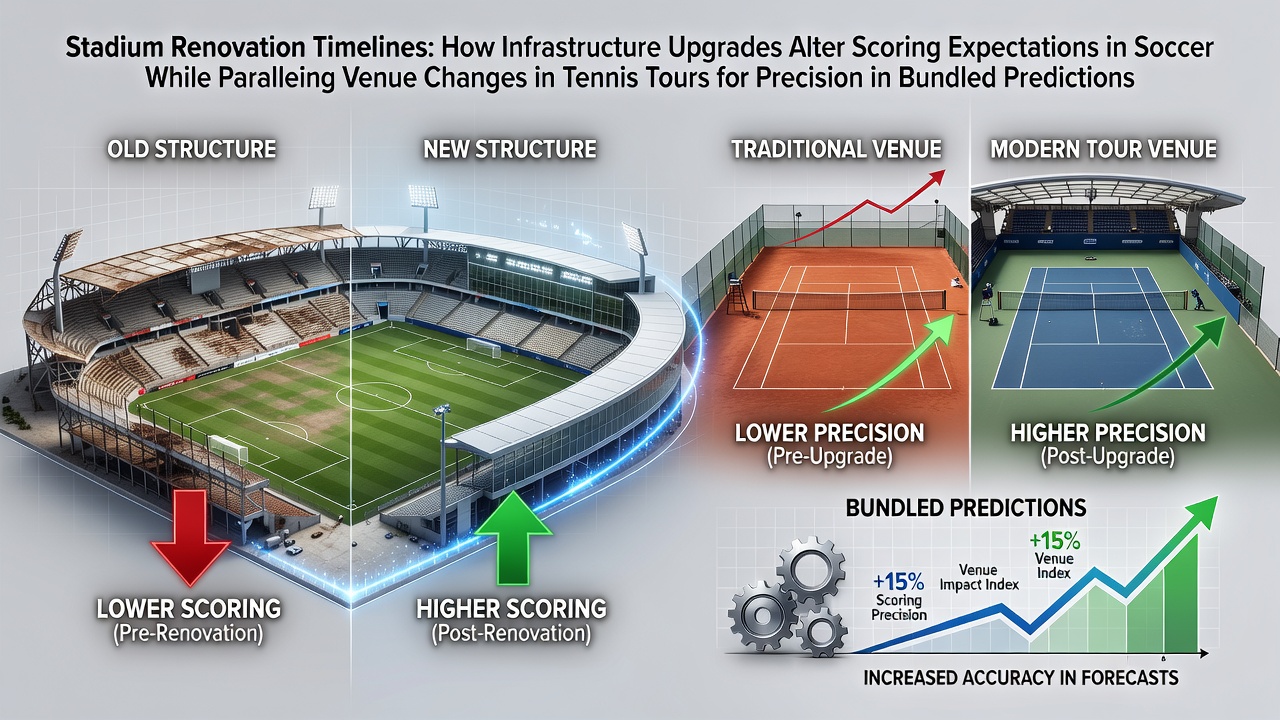
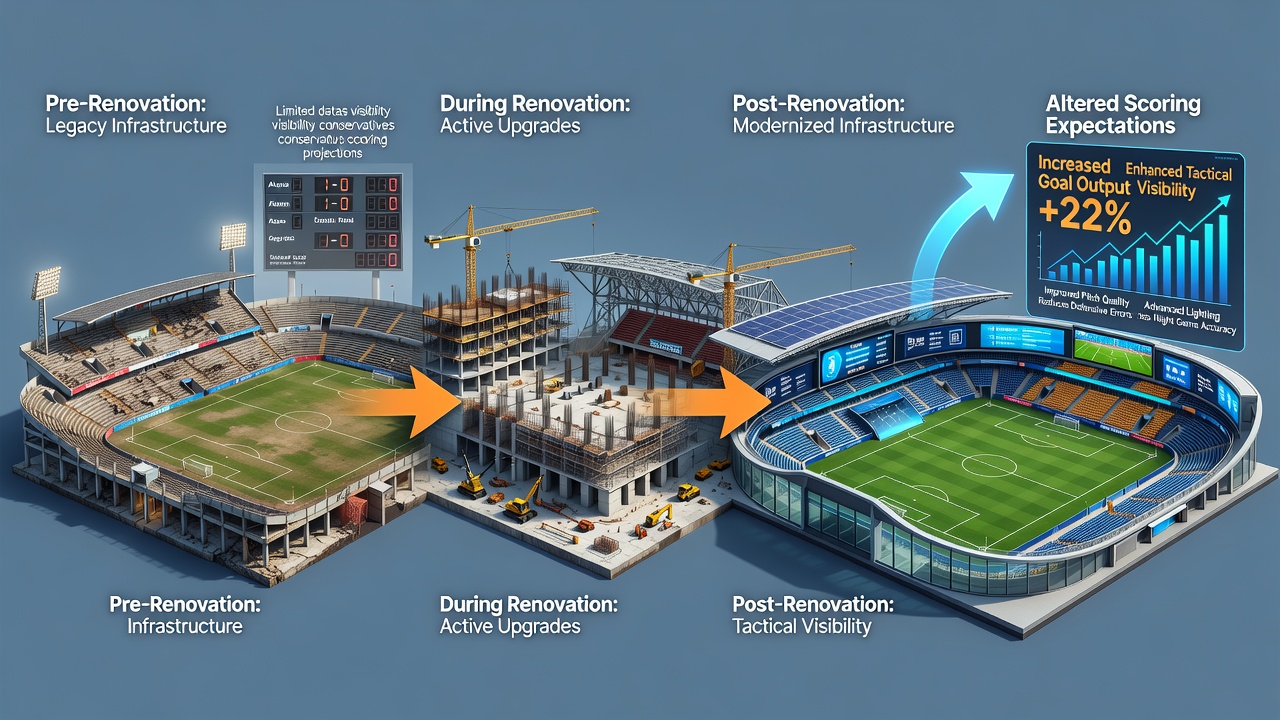
Stadium renovation projects span multiple years and involve phased construction that directly influences playing conditions on the pitch, and observers note how these changes shift goal-scoring patterns in soccer leagues while similar venue modifications occur across tennis circuits. Data from completed upgrades shows that new drainage systems and pitch surfaces often increase average goals per game by 0.3 to 0.5 in the first season after reopening, according to performance records compiled by European football associations.
Soccer Stadium Upgrades and Scoring Shifts
Renovations frequently replace natural grass with hybrid surfaces that maintain better consistency throughout matches, and this stability reduces stoppages while allowing teams to maintain higher pressing intensities that lead to more open play. Figures from the German Bundesliga indicate that clubs returning to upgraded venues post-2024 recorded elevated shot volumes in home fixtures during the initial months, with away sides adapting more slowly to altered sightlines created by reconfigured stands.
Lighting improvements and expanded roof coverage further modify environmental factors inside the ground, whereas reduced wind interference on the field correlates with improved accuracy on long passes and set pieces. Research compiled by the Union of European Football Associations highlights cases where renovated arenas in Spain and Italy produced measurable increases in expected goals during evening fixtures after September 2026 scheduling adjustments took effect.
Parallels in Tennis Venue Modifications
Tennis tours implement comparable venue adjustments through court resurfacing, roof installations, and stadium expansions that change ball speed and bounce consistency, and these modifications parallel soccer pitch evolutions by altering baseline hold rates and break-point conversion statistics. ATP and WTA data tracking indoor hard-court upgrades demonstrate that faster surfaces installed in 2025 events raised service hold percentages by 4 to 7 points compared with prior-year benchmarks at the same locations.
Outdoor tournaments that add retractable roofs experience shifts in match duration because players face fewer weather-related interruptions, while enclosed environments reduce fatigue variables that previously influenced later sets. Studies from Australian sports research institutions have documented how such changes affect rally lengths and error rates during extended best-of-five encounters on the men's tour.
Integrated Effects on Multi-Event Prediction Models
Bundled predictions that combine soccer and tennis outcomes benefit from synchronized awareness of renovation timelines because both sports exhibit temporary deviations in scoring distributions during the first 12 to 18 months after venue changes. Analysts tracking these patterns observe that early-season soccer matches at refurbished grounds often produce higher over totals in the opening quarter, while tennis events at updated facilities show compressed game lengths that influence set-over markets.
Coordinated scheduling around September 2026 includes several high-profile soccer reopenings alongside tennis Masters events that feature new court configurations, and cross-referencing these timelines allows models to adjust probability weights for combined selections. Performance metrics collected across multiple leagues reveal that teams and players require three to five matches to recalibrate to modified conditions, creating identifiable windows where historical averages diverge from updated expectations.
Travel and acclimatization factors compound these venue-specific effects when squads or players move between competitions, and data from international federations shows that recovery cycles interact with surface familiarity to produce layered variance in outcomes. Models incorporating both soccer goal distributions and tennis hold percentages therefore achieve tighter calibration when renovation schedules are factored into baseline calculations rather than treated as static variables.
Timeline Tracking and Data Integration Practices
League organizers publish detailed renovation calendars that list construction phases, temporary relocations, and reopening dates, enabling forecasters to map anticipated changes against fixture lists months in advance. Canadian regulatory reports on sports infrastructure note that phased reopenings create distinct performance bands, with partial-capacity crowds altering home advantage metrics until full attendance resumes.
Those who monitor both sports compile surface and pitch certification data alongside crowd-density statistics to refine accumulator structures, and the resulting adjustments account for temporary deviations that stabilize only after repeated exposure. European tournament calendars for late 2026 include overlapping windows where multiple soccer clubs and tennis venues complete upgrades simultaneously, providing natural test cases for validating prediction refinements.
Conclusion
Stadium renovation timelines create measurable, time-bound shifts in soccer scoring expectations that align with venue-driven changes across tennis tours, and integration of these factors into bundled prediction frameworks improves alignment with observed results during transitional periods. Records from completed projects across both sports confirm that systematic tracking of infrastructure timelines supports more precise modeling of combined event outcomes without reliance on static historical baselines.