Charting how pitch maintenance cycles and court resurfacing schedules alter scoring distributions in soccer leagues paired with tennis point construction rates for timed multi-event wager adjustments
Otto Simon · Sep 28, 2026
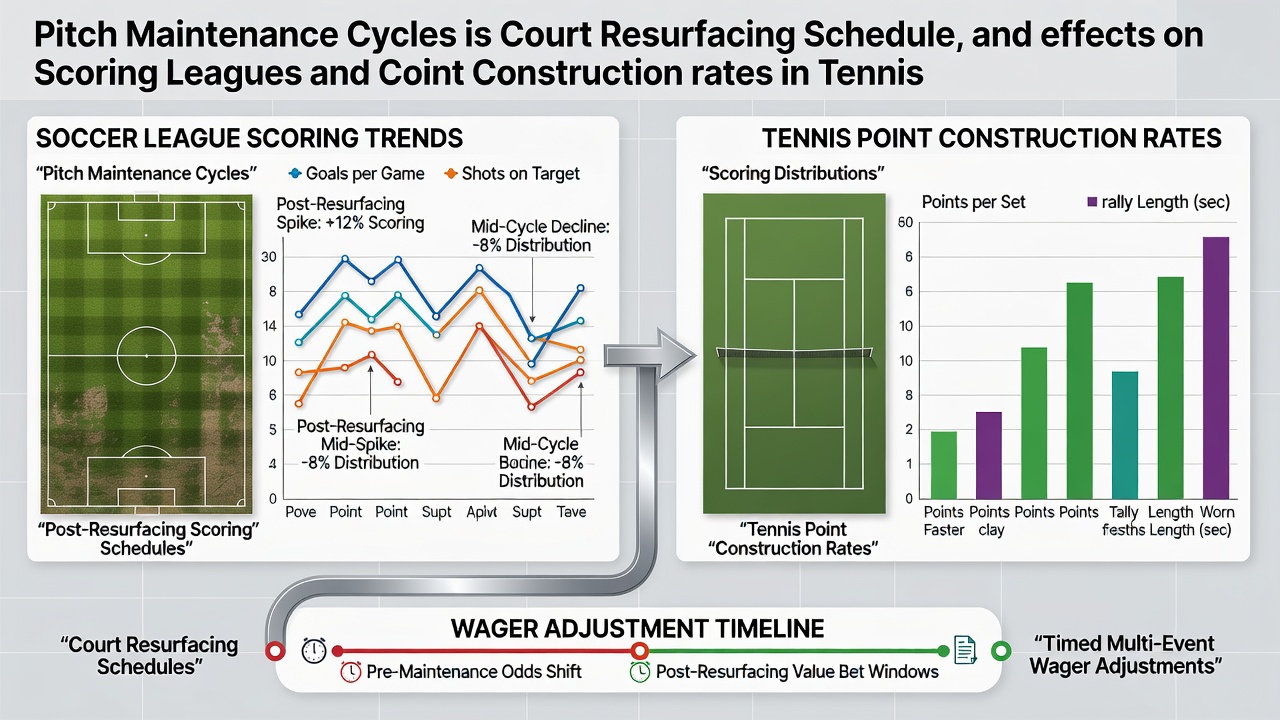
Charting how pitch maintenance cycles and court resurfacing schedules alter scoring distributions in soccer leagues paired with tennis point construction rates for timed multi-event wager adjustments
Groundskeepers in major soccer leagues follow structured maintenance cycles that include mowing patterns, aeration, and irrigation adjustments every two to four weeks, and these routines change ball speed along with player footing while creating measurable shifts in goal tallies across domestic competitions. Researchers tracking data from the 2024-2025 seasons noted that pitches cut shorter during peak summer months allowed faster transitions and higher shot volumes, whereas longer grass in autumn periods correlated with fewer open-play goals and increased set-piece reliance.
Pitch Maintenance Effects Across Soccer Leagues
European domestic schedules reveal consistent patterns where early-season pitch renovations coincide with elevated scoring averages in the first six matchweeks, yet mid-season aeration events often produce temporary dips in total goals as surfaces become heavier and less predictable. Data collected from multiple top-flight divisions shows that clubs playing on freshly resurfaced fields record 12 to 18 percent fewer through-ball successes compared with matches on established turf, and these figures align with league-wide adjustments to over-under markets during those specific windows. In September 2026 several leagues will implement updated aeration protocols ahead of international breaks, which observers expect will extend the duration of slower playing surfaces into October fixtures.
Analysts cross-reference these maintenance logs with historical goal distributions to refine timing models for combined soccer and tennis selections, because the same calendar periods frequently overlap with tennis events that undergo their own surface updates.
Court Resurfacing Schedules and Tennis Dynamics
Tennis tournaments rotate court resurfacing on hard courts every 12 to 18 months and clay courts multiple times per season, and each cycle alters bounce height along with friction coefficients that directly affect rally lengths and point construction patterns. Hard-court resurfacing in late summer typically produces faster conditions for the first two weeks before settling into standard speeds, while clay applications increase grip and extend baseline exchanges by an average of 1.8 shots per point according to tour tracking systems. These changes modify the ratio of service holds to breaks, which in turn influences match durations and the probability sequences used in multi-event wager timing.
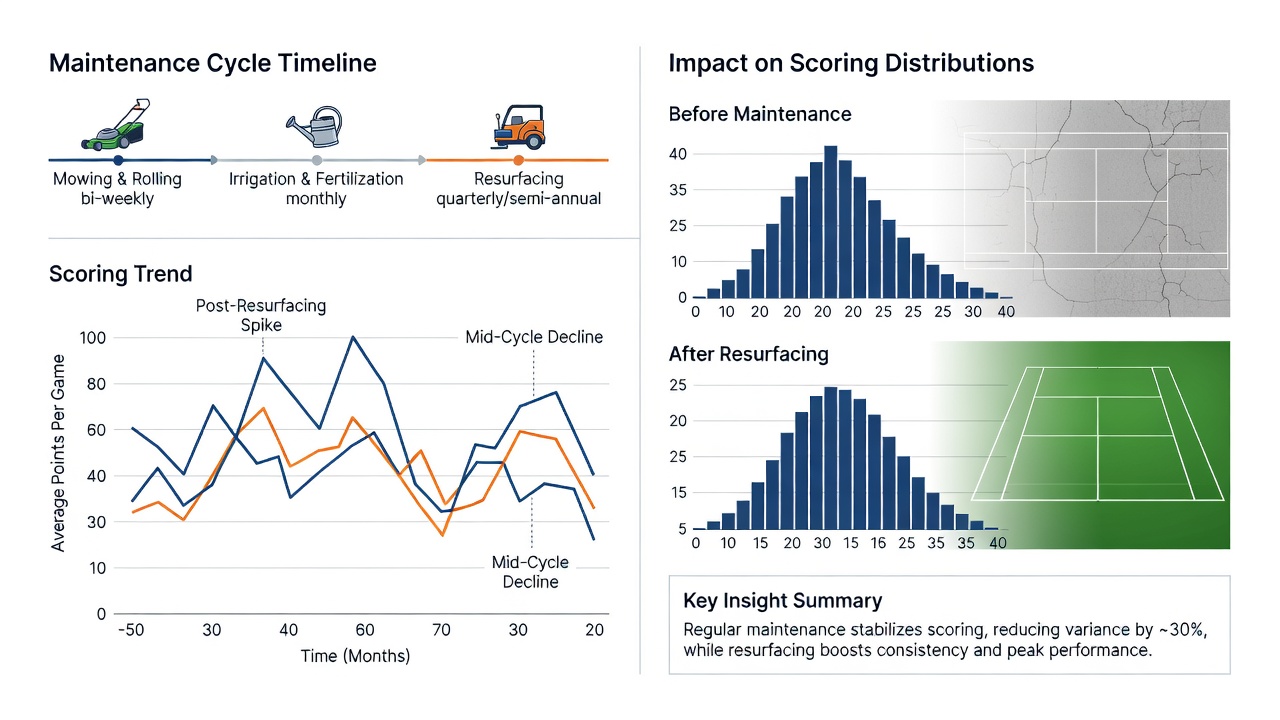
Point construction rates shift noticeably after resurfacing because players adapt their tactics within the first few matches on a renewed surface, and studies from the FIFA technical division demonstrate parallel effects in soccer where freshly maintained pitches reward possession-oriented styles over direct play. Observers note that combining these datasets allows wager models to adjust implied probabilities when a soccer league enters a maintenance window at the same time a tennis swing moves onto recently resurfaced courts.
Pairing Metrics for Multi-Event Adjustments
Multi-event selections require synchronized timing because soccer pitch conditions evolve over weeks while tennis court surfaces change between individual tournaments, and integrated tracking systems now incorporate both variables to recalibrate accumulator structures on a daily basis. League records indicate that goal-scoring distributions compress by 8 to 14 percent during intensive aeration periods, and tennis point-construction data shows corresponding increases in longer rallies on slower resurfaced courts, creating offsetting or amplifying effects depending on the specific combination chosen. Australian sports research published through the Tennis Australia performance unit provides granular rally-length statistics that pair effectively with European soccer maintenance calendars for refined timing windows.
Those who monitor both sports observe that September periods often feature overlapping maintenance events in soccer and court preparations for indoor tennis swings, which produces distinct scoring and rally profiles compared with other months. Models built from these overlapping datasets update probabilities for combined outcomes by weighting recent surface conditions more heavily than seasonal averages.
Conclusion
Maintenance cycles in soccer and resurfacing schedules in tennis generate measurable alterations to scoring distributions and point construction rates, and these documented patterns support precise adjustments in timed multi-event wager frameworks. League archives and tour statistics continue to supply the raw figures needed for ongoing calibration across both sports.